
In May of 2023 — just six weeks after his release from federal prison — Luke Wenke was arrested on a federal violation of supervised release (VOSR) charge for allegedly indirectly contacting his cyberstalking victim. More specifically, federal prosecutors accused Wenke of sending a vitriolic email to the victim’s business partner, allegedly with the awareness that the correspondence would be passed onto his victim — and with that precise intention.
What Constitutes An “Indirect Contact” Violation?
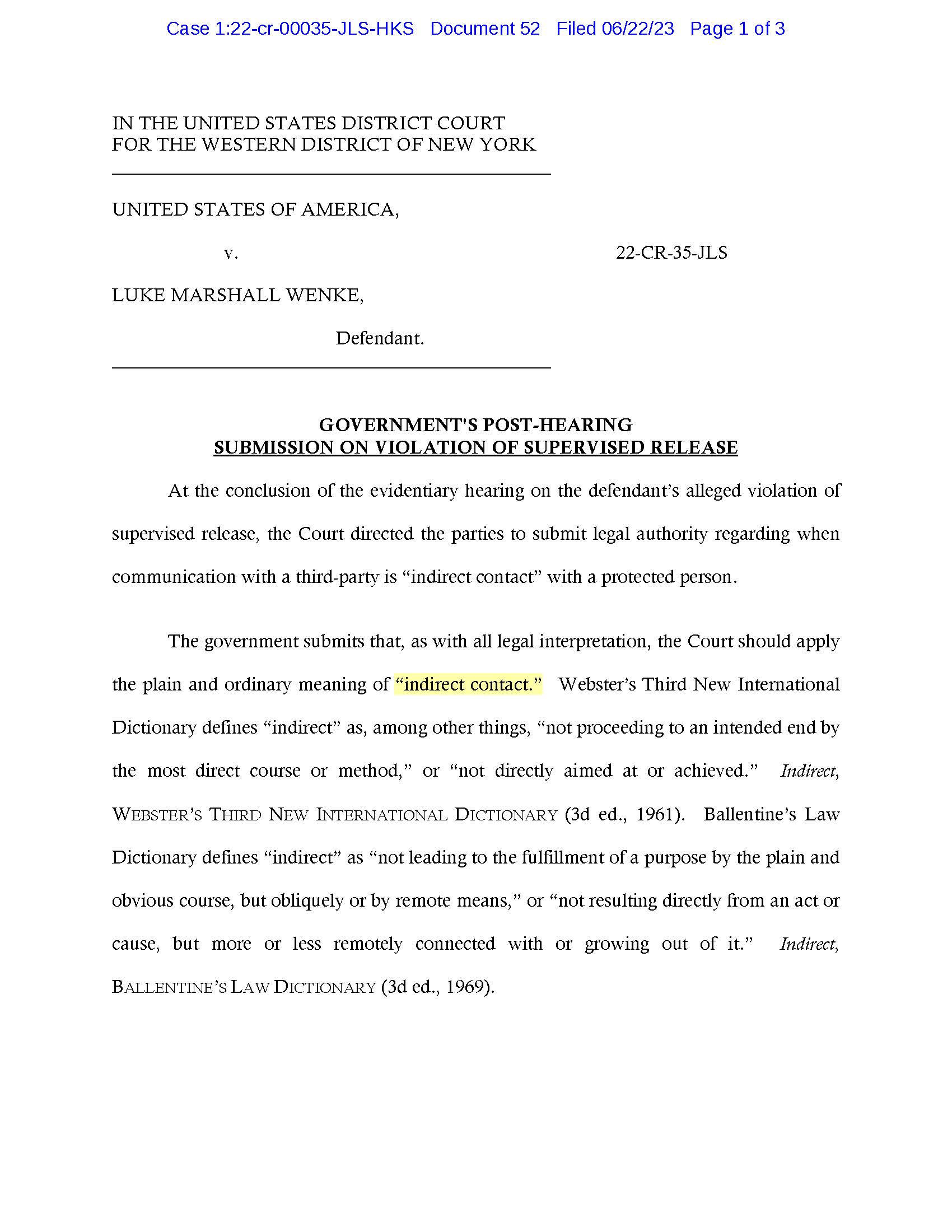
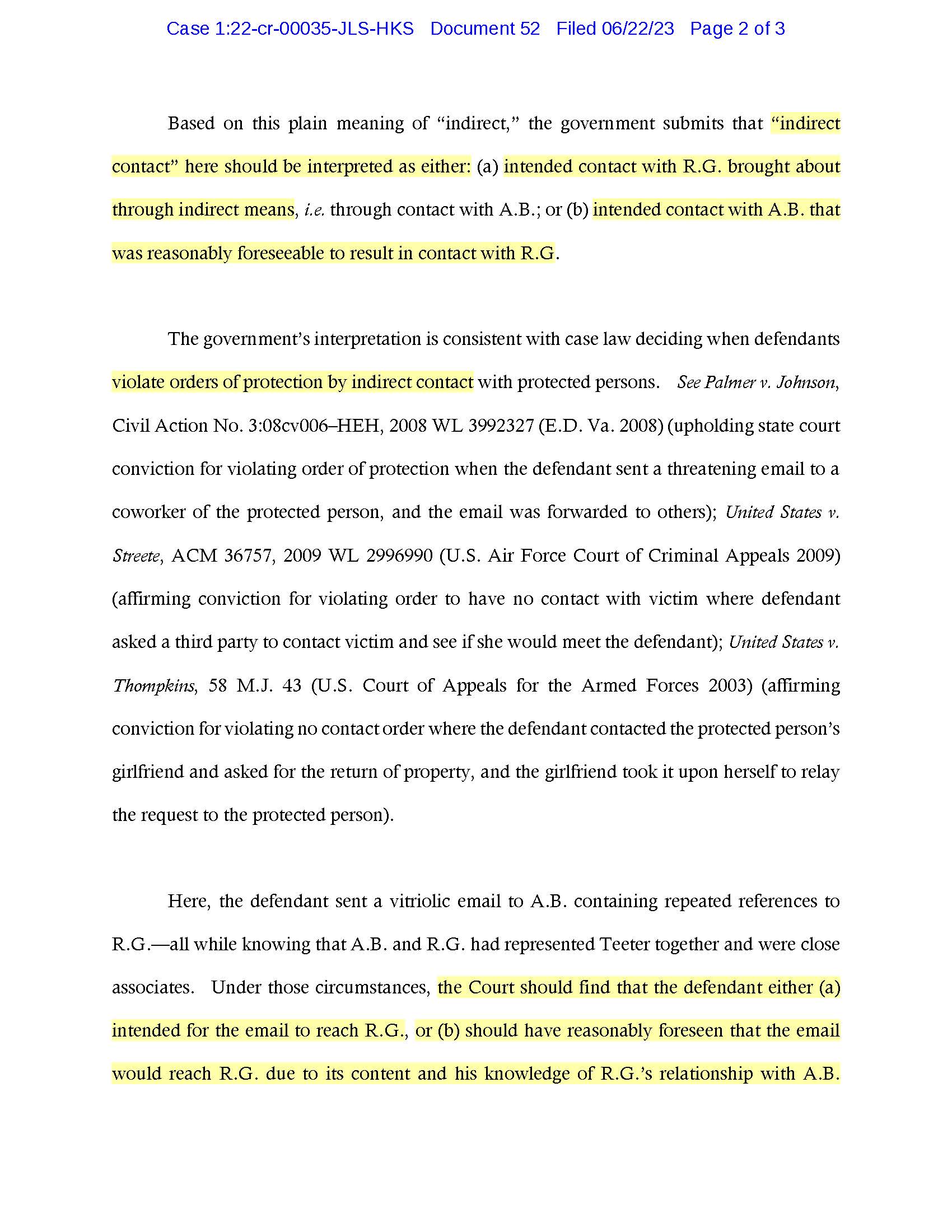
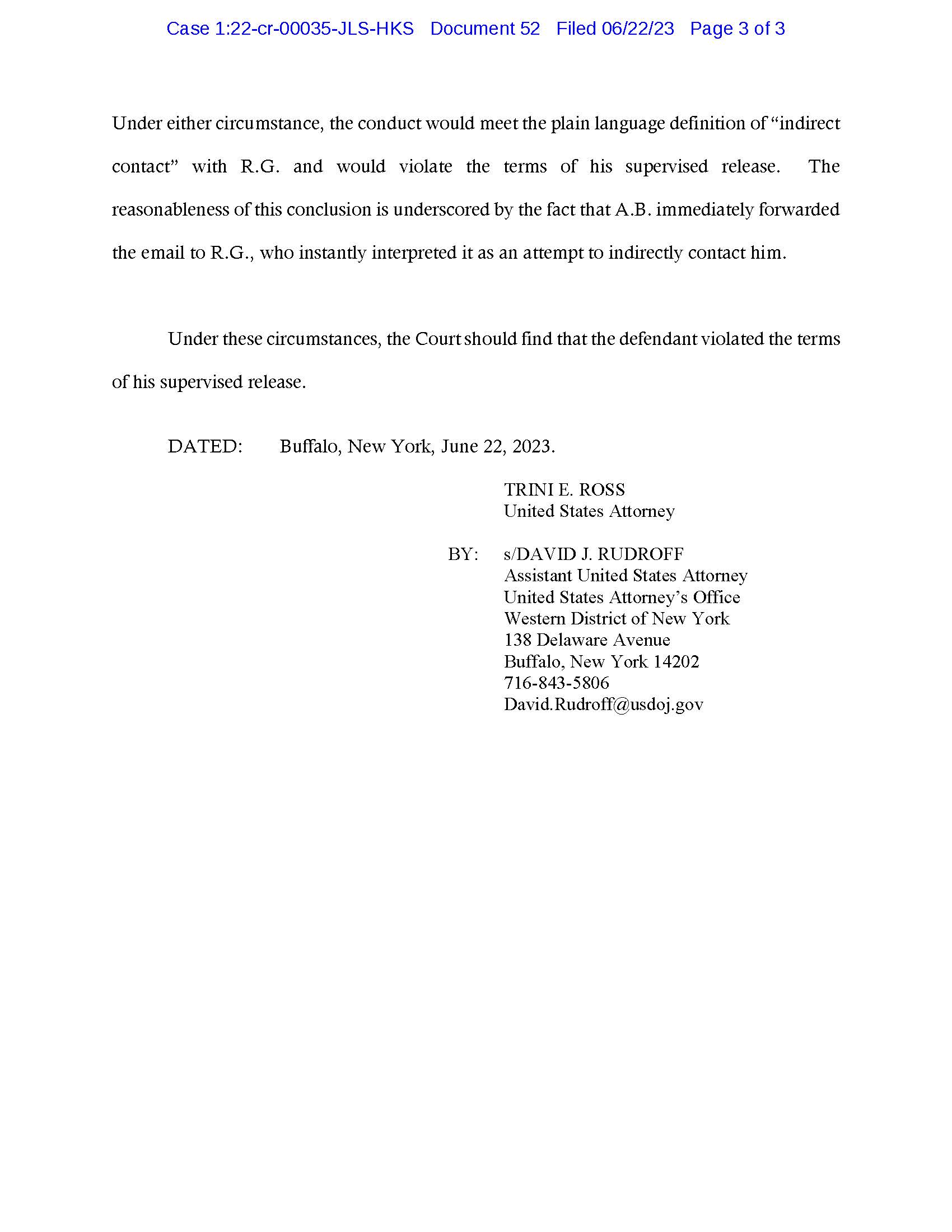
During the proceedings revolving around Luke Wenke’s first VOSR charge, the judge overseeing the case ordered the prosecution and defense to submit written arguments about what what they believe constitutes an “indirect contact” violation of supervision. In the first memorandum below, the U.S. Government argues for the application of a “plain and ordinary meaning” of the term, to be “interpreted as either: intended contact … brought about through indirect means,” i.e. by Wenke contacting his cyberstalking victim’s business partner, or as intended contact with the victim’s business partner that was “reasonably foreseeable” to result in contact with the victim.
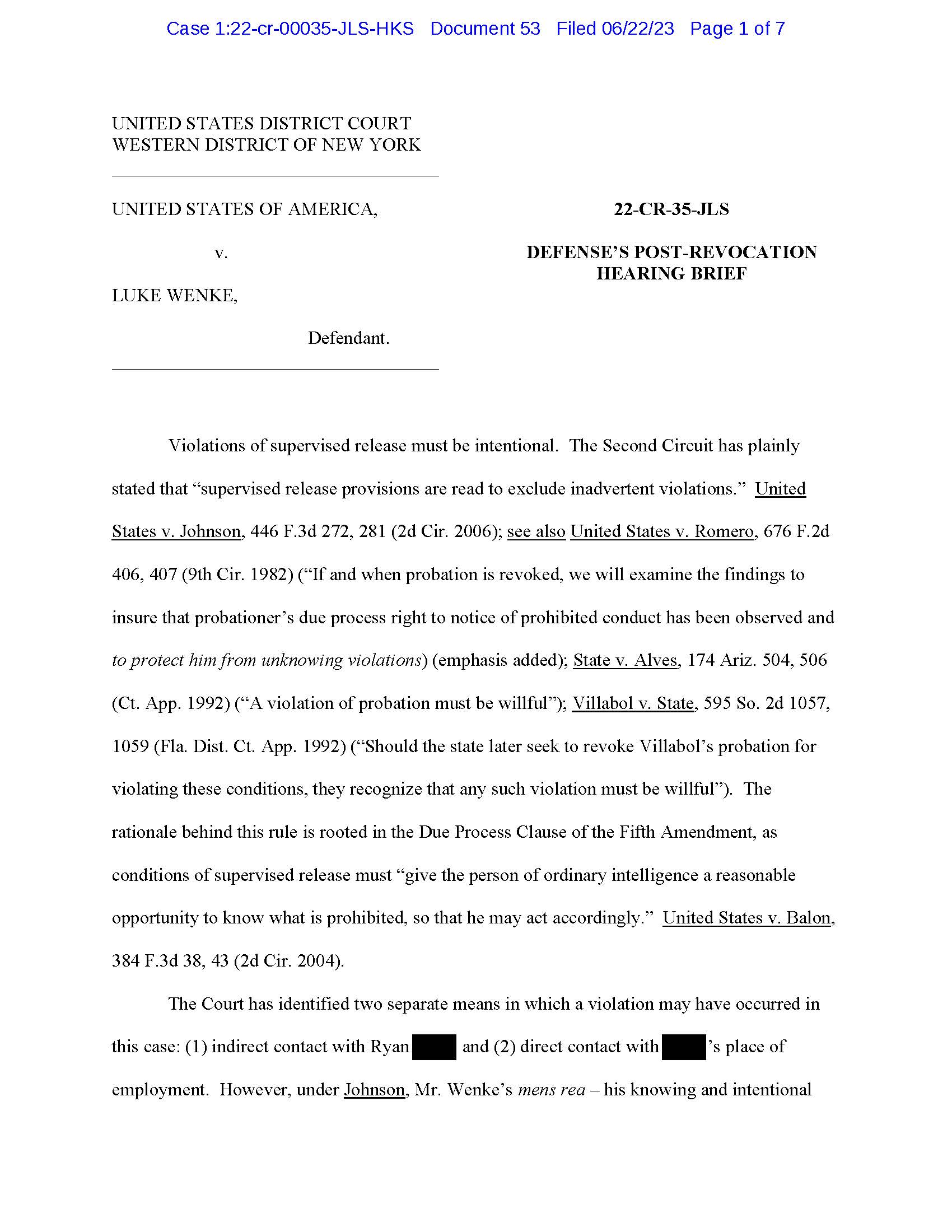
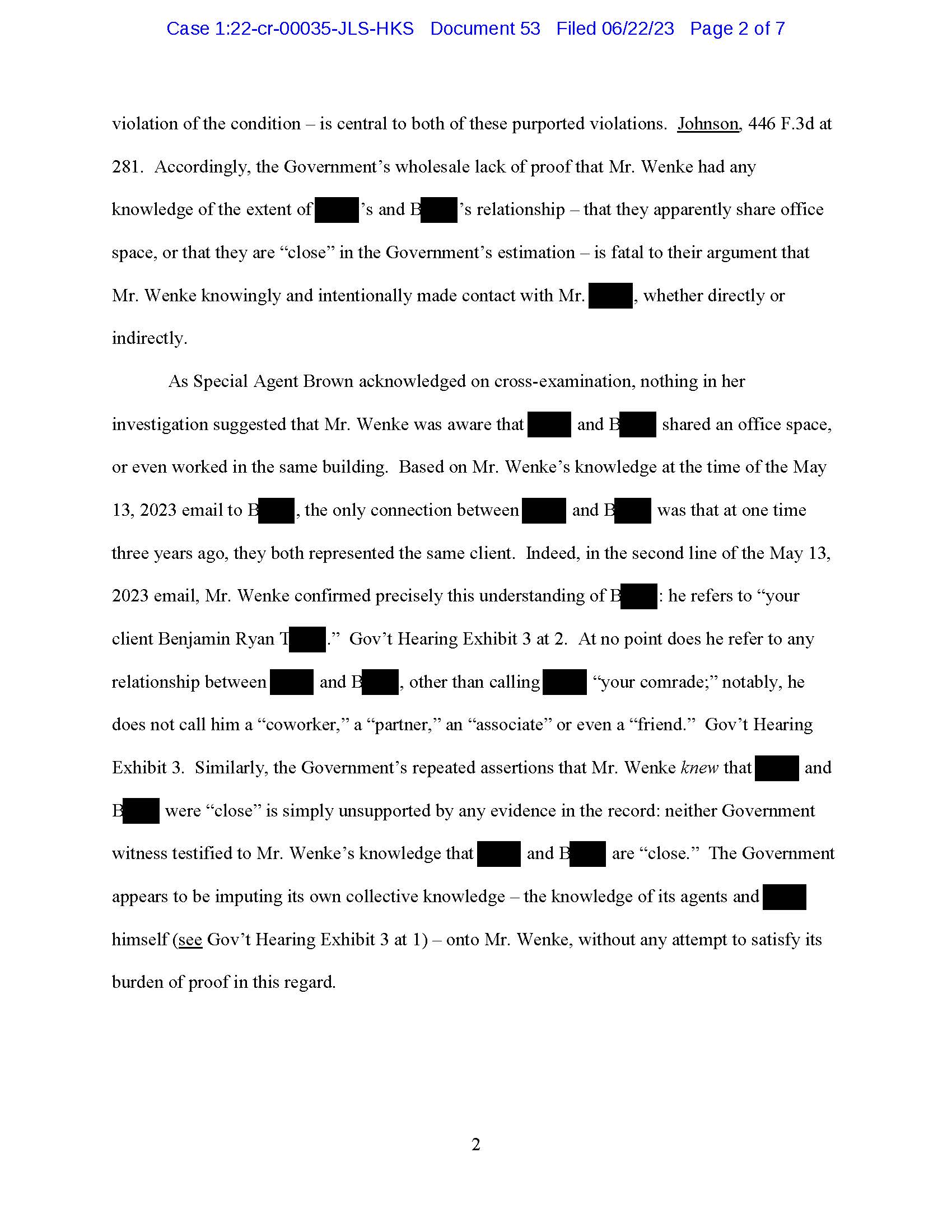
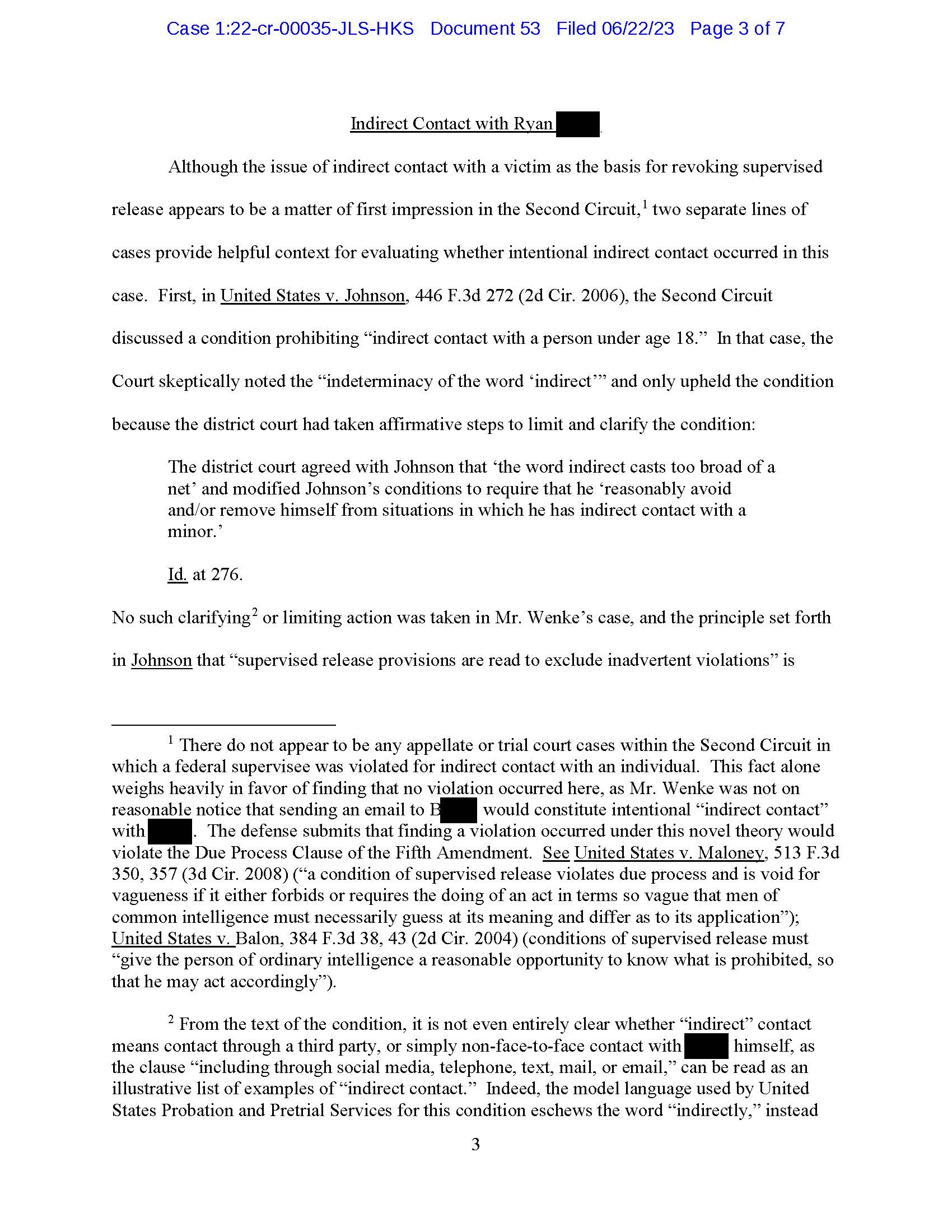
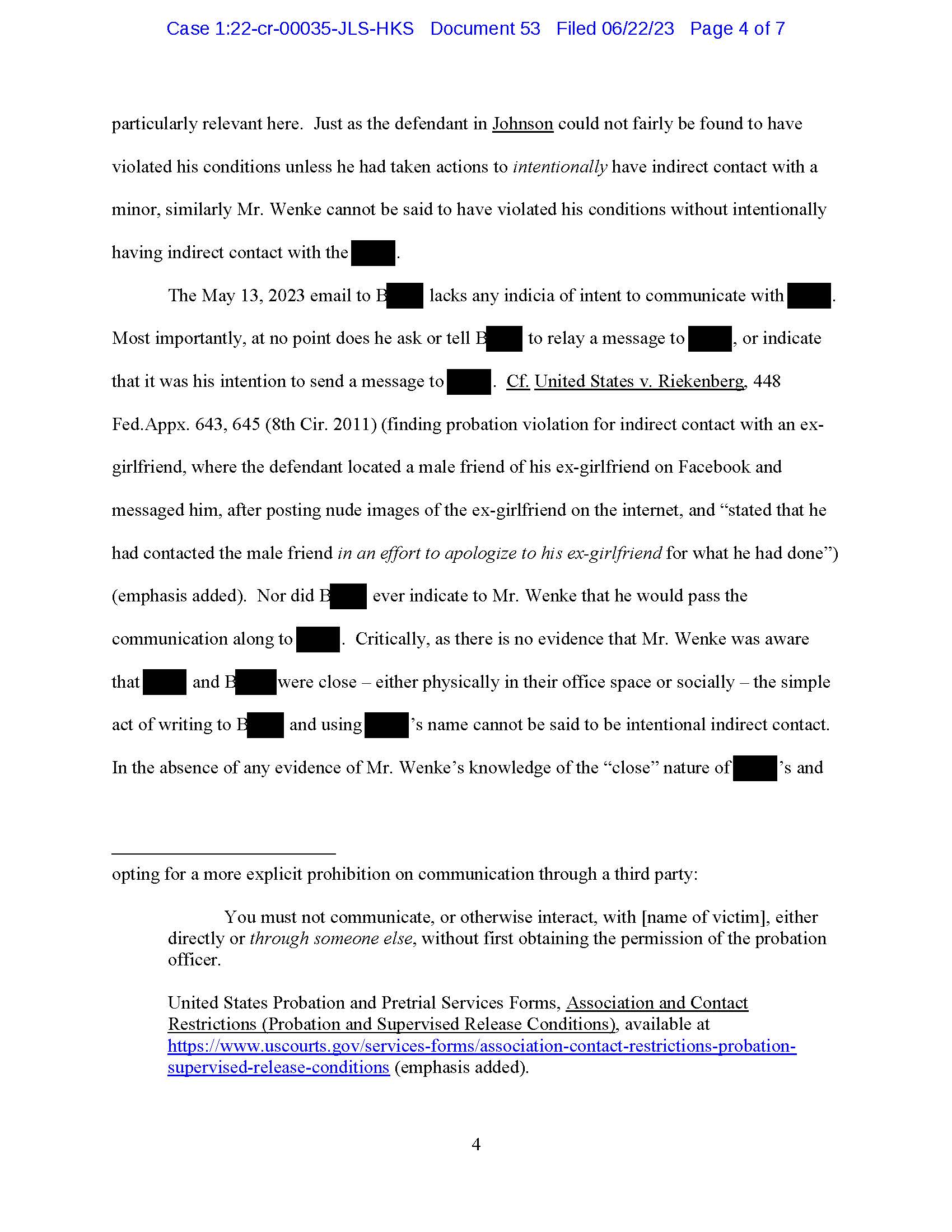
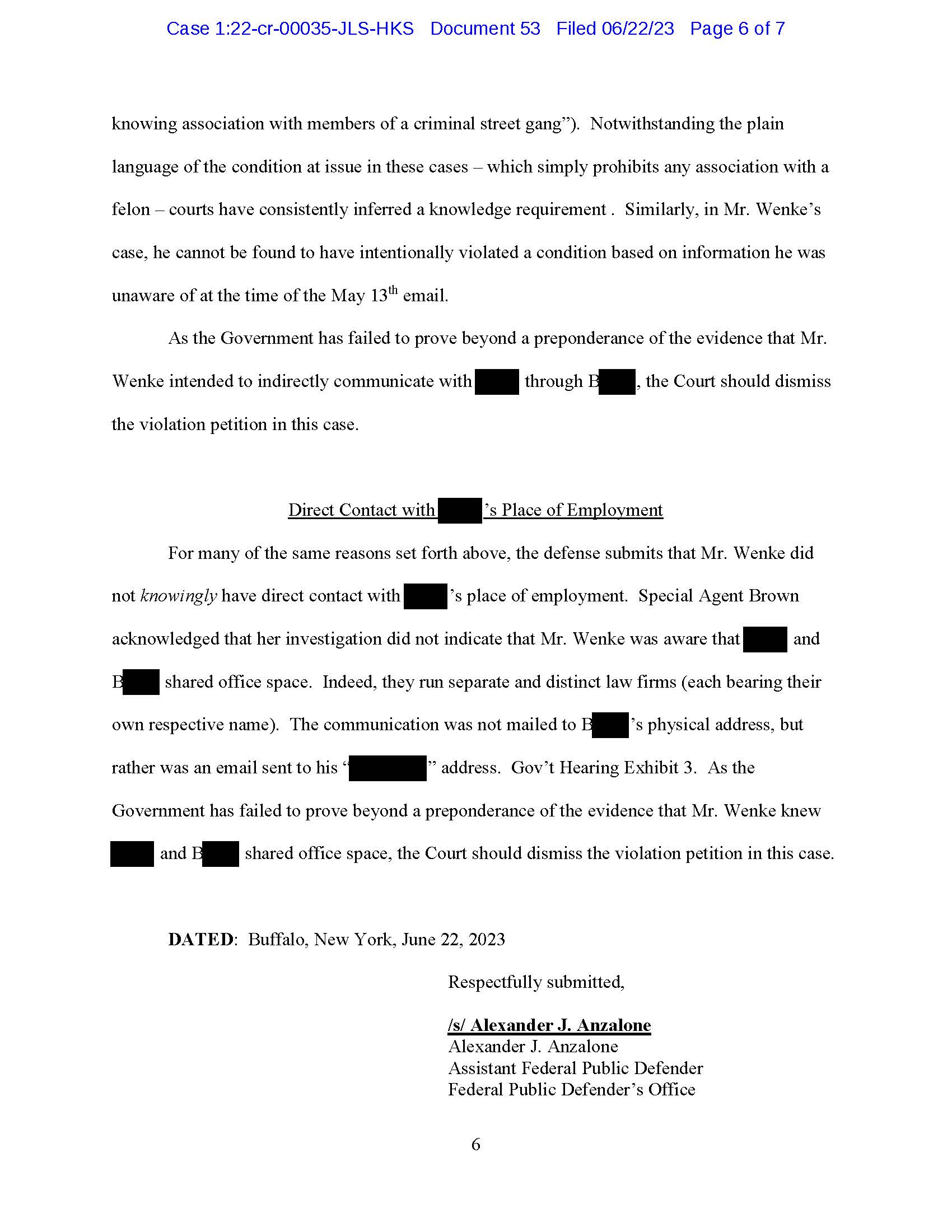
The second PDF viewer below contains the defense’s memorandum, which posits that supervised release violations must be intentional and that the prosecution had failed to prove that Luke Wenke knew he was committing a violation by emailing his victim’s business partner. In other words — from my understanding, at least — Wenke supposedly didn’t mean to violate probation, so he therefore did not violate probation.
Wenke’s public defender also argued that the defendant may have been unaware of the close relationship between his cyberstalking victim and the victim’s colleague, even though he knew that they had both represented his romantic obsession, Ryan, in a federal terrorism case.
I have my own opinion (and evidence) regarding whether I believe Luke Wenke was aware of the close friendship between Victim 1 and Victim 1’s business partner, but I don’t want to unintentionally muddle my beliefs with the official record or the arguments put forth by the parties involved, so I’ll discuss this in a separate post at a later point in time. (If you’re curious, please feel free to ask me about privately in the meantime.)
The Verdict: GUILTY of Violating Supervised Release
After considering the evidence and arguments from both sides, the judge concluded that Luke Wenke had, in fact, violated the terms of his supervised release. The judge sentenced Wenke to time served, extended the length of his probation term, and continued the condition of release banning Wenke from having any contact, whatsoever — including by indirect means — with his cyberstalking victim.
USA v. Luke Wenke | Prosecution’s Post-Hearing Brief
June 22nd, 2023
Case #1:22-cr-00035, Doc. #52
USA v. Luke Wenke | Defense’s Post-Hearing Brief
June 22nd, 2023
Case #1:22-cr-00035, Doc. #53
Categories: Luke Wenke, Court Documents: memorandums, post-hearing briefs; Obsessions: Ryan/Benjamin obsession
Tags: Buffalo, NY; conditions of supervised release, contact ban violations, cyberstalking, Assistant U.S. Attorney David Rudroff, FBI, indirect contact, Minneapolis, Minnesota, probation violations, unwanted contact, Victim 1, violations of supervised release (VOSR)